What are some common problems with screw air compressors?
Screw Air Compressor Faults: Troubleshooting Common Problems
2026/11/20
Reading volume: 0
News Details
Screw air compressors are built for long, steady service. Yet like any machine, they develop faults when parts wear or maintenance slips. Most problems show up as low pressure, high heat, oil in the air line, noise, or a failure to start. The good news is that many of these issues have simple, early warning signs. This guide walks buyers and operators through the most common problems with screw air compressors, what causes them, and the basic checks that help. It also explains how good design and regular care prevent most downtime.
Low or No Pressure Output
Low pressure is the most reported screw compressor problem. The machine runs, but tools and lines do not get enough air. Common causes include a clogged air filter, a leaking intake valve, worn seals, or demand that is higher than the compressor can supply. Air leaks in the pipe network also waste pressure.
Start with the simple checks. Look at the air filter and replace it if it is blocked. Check the oil level. Walk the air lines and listen for hissing leaks. If pressure is still low, the intake valve or the separator may need service. A technician should inspect worn rotors or seals. Matching the machine size to real demand prevents this problem from the start.
Overheating
Overheating is serious because heat breaks down oil and wears parts fast. A screw compressor may run too hot when the cooling fan is dirty, the cooler is blocked, or the room has poor ventilation. Low or old oil also reduces cooling. High ambient temperature adds stress on hot days.
Watch the discharge temperature gauge during normal running. Clean the cooler fins and check that fans turn freely. Replace oil on schedule with the correct grade. Improve airflow around the machine if the room is tight. If temperature stays high, the thermostat or temperature sensor may be at fault. Do not ignore repeated high-temperature alarms, since they often lead to bigger repairs.

Oil Carryover and Oil in the Air Line
Oil carryover means oil travels out with the compressed air. Operators notice oil in the receiver, in filters, or at the point of use. The usual cause is a blocked or damaged oil separator element. Overfilling the oil, a blocked return line, or a faulty minimum pressure valve can also cause carryover.
Check the oil level when the machine is loaded, not at rest. A level above the correct mark often points to overfilling. Replace the separator element if it is due. Make sure the return line is clear. Using the wrong oil grade can worsen foam and carryover. If air quality matters for your process, pair the compressor with proper filtration and a dryer.
Unusual Noise and Vibration
A healthy screw compressor has a steady, even sound. New banging, grinding, or high-pitched noise signals trouble. Vibration often comes from loose bolts, worn bearings, a misaligned coupling, or an unstable foundation. Belt-driven units may squeal when belts are loose or worn.
Tighten mounting bolts and check the machine sits level. Inspect belts and couplings for wear. A high-frequency metal sound may point to a bearing problem, and the unit should be stopped before it is checked. Running a machine with strong vibration risks damage to the airend, so act early.
Air Filter and Intake Problems
The air filter is the first line of defence. In a dusty plant it blocks quickly. A clogged filter starves the compressor of air, which lowers output and raises temperature. It also pushes the machine to work harder, wasting power. Intake valves that stick create similar symptoms.
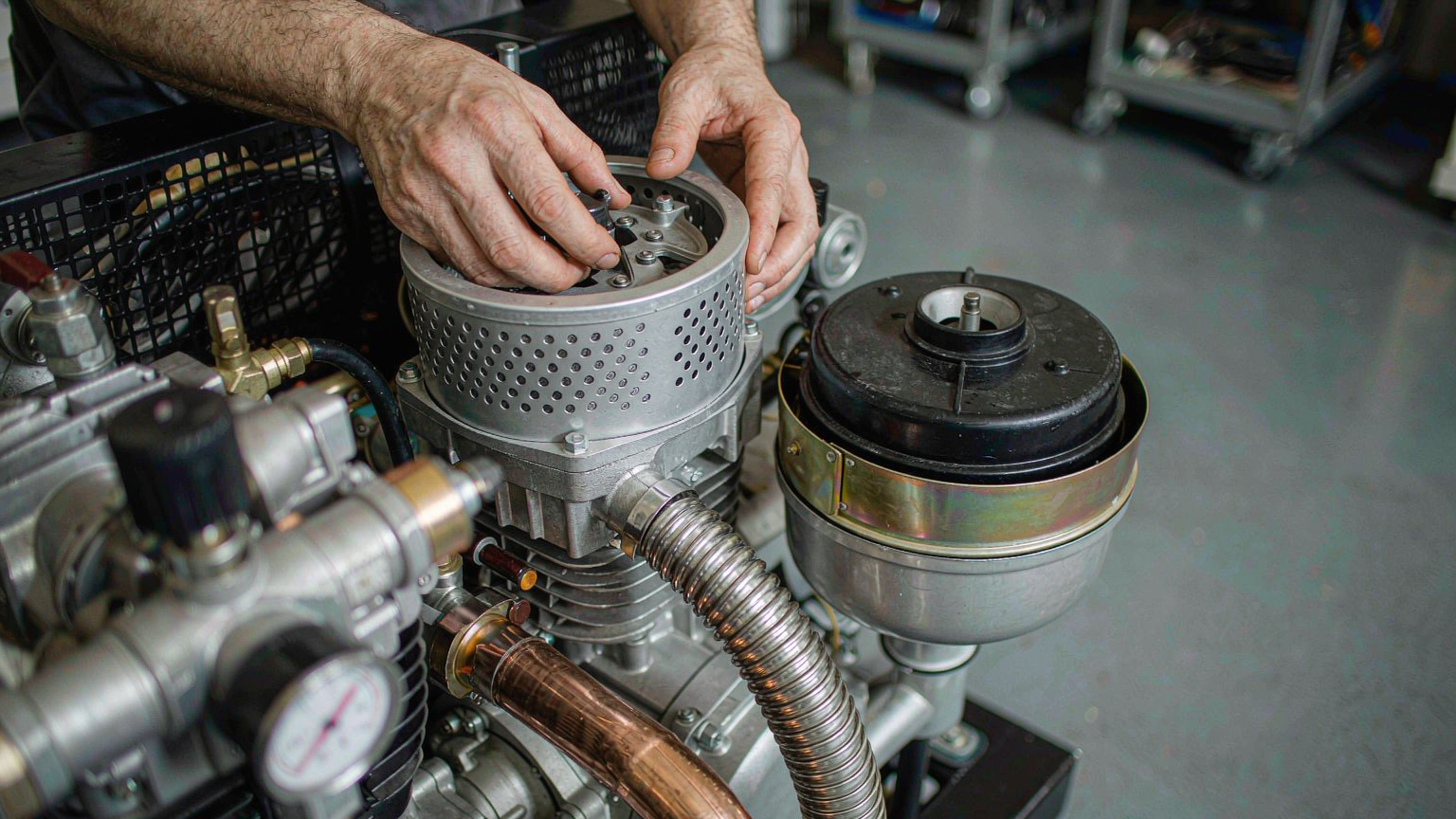
Inspect the filter on a fixed schedule and change it when dirty rather than waiting for a fault. Keep the intake area clean and dry. Many integrated designs place the filter and intake valve where they are easy to reach, which shortens service time. You can see this approach in our integrated screw compressor unit with built-in motor.
The Compressor Will Not Start
A machine that will not start usually has an electrical or safety issue. Possible causes include a blown fuse, low voltage, a tripped thermal relay, or a control fault that has not been reset. A machine may also refuse to start after a high-temperature shutdown until it cools down.
Check the power supply and reset the protection device once the cause is clear. Do not keep resetting a fault without finding its root, since repeated starts can damage the motor. If the drive or controller shows an error code, record it before calling for service.
How Preventive Maintenance Prevents Most Faults
Most of the problems above share one root: missed maintenance. A simple routine keeps a compressor reliable for years.
- Check oil level and quality on a set schedule.
- Replace air filters, oil filters, and separators on time.
- Record running temperature, pressure, and current.
- Listen for new noise and feel for new vibration.
- Keep the room clean, dry, and well ventilated.
Logging these readings helps you spot a slow change before it becomes a failure. For complex faults, always switch off, release pressure, and follow lock-out rules before opening the machine.
Final Thoughts
Common screw compressor problems include low pressure, overheating, oil carryover, noise, intake faults, and start-up failures. Most give early signs and respond well to basic checks. Choosing a well-integrated machine makes service faster and reduces failure points. To learn more about our airends and complete units, or to discuss a supply plan for your market, visit the WoYo compressor website and review our manufacturing and quality insights.
Share to:


